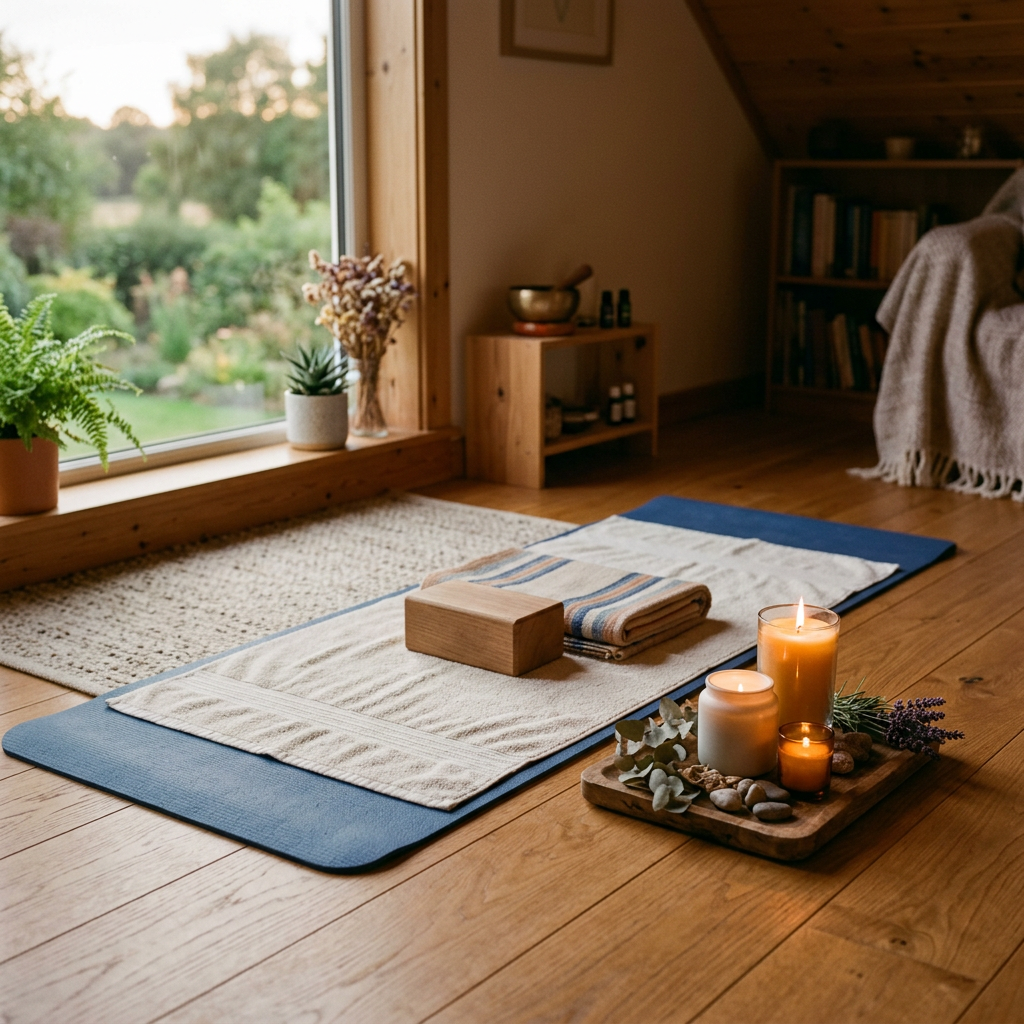
MEDITATION
Finding time to reconnect with yourself is so important to add to your daily routine. A simple meditation practice of even just five minutes has proven to reduce stress. It is important to remember that you don’t have to actually “clear your mind”.
A simple beginner meditation routine
Step 1: Start with just 5 minutes
Set a timer for:
- 3–5 minutes at first
- gradually increase if it feels helpful
Consistency matters more than duration.
Step 2: Sit comfortably
You do not need a special pose.
Try:
- chair with feet on floor
- cushion
- bed edge
Keep:
- spine relaxed but upright
- shoulders soft
- jaw unclenched
Step 3: Focus on one thing
The easiest option is the breath.
Notice:
- air moving in
- air moving out
- chest or belly rising
When your mind wanders (it will):
- gently return attention to breathing
That returning is the practice.
Step 4: Use a simple breathing rhythm
This calming pattern is beginner-friendly:
- inhale for 4
- exhale for 6
Repeat naturally.
Longer exhales can help calm stress and anxiety.
Beginner meditation styles that work well
Breath meditation
Best for:
- stress
- anxiety
- sleep
Body scan
Slowly notice sensations from head to toe.
Best for:
- tension
- menopause stress
- sleep problems
Walking meditation
Walk slowly and notice:
- steps
- breathing
- sounds
Good if sitting still feels difficult.
Guided meditation
Excellent for beginners.
Popular apps:
- Calm
- Headspace
- Insight Timer
A very practical daily schedule:
Morning (recommended)
5 minutes before checking your phone.
Evening
Good for:
- menopause symptoms
- racing thoughts
- sleep
Common beginner mistakes
- expecting an empty mind
- meditating too long too soon
- judging yourself for distraction
- quitting after a few restless sessions
A wandering mind is normal.
Helpful mindset
Think of meditation as:
- training attention
- calming the nervous system
- practicing awareness
Not “perfect concentration.”
 My Wellness Blog